Microsoft postpones the change for new CSP purchases to January–March 2027. Certain eligible experiences may incur charges beyond license fees, subject to an adjustable monthly limit.
Microsoft · Announcement: · Editorial review
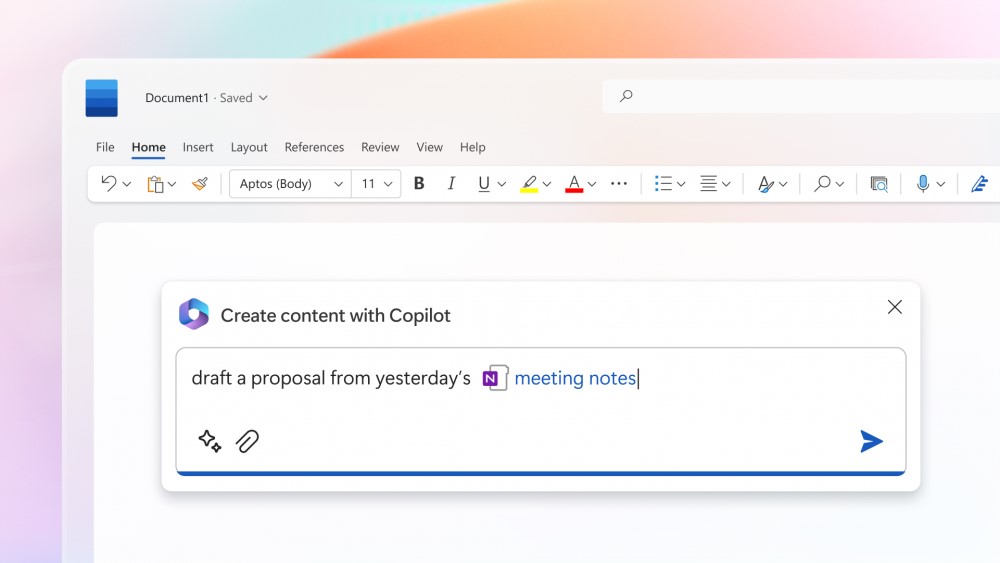
Microsoft 365 Copilot in Microsoft Word (archive). Image: Microsoft. Used with permission from Microsoft.
The change merged into BCApps creates per diem lines in each traveler's new expense report. Its inclusion in the repository does not yet establish deployment to customer environments.
GitHub Enterprise Cloud includes Copilot access for eligible enterprises, without an included credit allowance. Availability depends on the purchasing channel, and metered usage is billed from the first use.
The change replaces mark-based deletion and adds tools to inspect and clean up residual records. Integration into the repository does not yet confirm availability in a shipped Business Central update.
Microsoft has announced bundles of Business Central Essentials or Premium with Microsoft 365 Copilot Business from January 1, 2027. Published prices are USD 95 and USD 125 per user per month; accessible experiences will depend on licensed apps and services.
Microsoft brings equipment rental management into Supply Chain Management, connected with Finance. The documentation provides a basis for examining the process; the Copilot Cowork scenario is presented as a demonstration.
Microsoft extends usage limits to additional Copilot Chat features for users without a Microsoft 365 Copilot license in commercial organizations. The notifications call for support preparation and a review of license requests, without turning every limit into a recommendation to buy.
The API supports reading and updating policies across enterprises, organizations, teams, and agent apps. Using it requires identifying who controls each decision and reviewing changes.
The instructions guide compatible coding assistants. Evaluating them requires checking installation scope, project dependencies, and the changes they generate.
Apple opens app action integration through App Intents. For developers in Spain, Siri AI availability on Mac and Vision Pro sits alongside its absence on iPhone, iPad, and Apple Watch.
A change merged into BCApps allows an interim approver to be configured while an expense report is Released, before submission for approval. Deployment to customers is unconfirmed.
Public GitHub sources consulted on November 7, 2026. No models were tested or accounts inspected. Exceptions to the announcement’s scope are not fully identified.
The October 19 announcement deprecates six models across most Copilot experiences, including Chat, inline edits, ask and agent modes, and code completions. Manual removal is unnecessary.
These were the suggested replacements in that announcement:
Affected model
Suggested alternative
Gemini 3.7 Flash
Gemini 3.8 Flash
GPT-5.5 and GPT-5.4
GPT-6.1 Sol
GPT-5.4 mini and GPT-5 mini
GPT-6 Luna
Grok 4.5
Grok 4.7
Availability: a listing does not guarantee universal access
The supported models documentation classifies all four alternatives as generally available. However, it still lists Grok 4.5 as available and omits it from the retirement history. This discrepancy prevents describing its retirement as uniform and fully clarified.
The sources consulted also do not enumerate every exception to “most” experiences. The announcement alone therefore cannot establish the status of every model and client combination.
What to review in access settings
According to GitHub’s configuration guide, access depends on the plan, client, and organization or enterprise restrictions. Owners can enable or disable models for Copilot Business and Enterprise users. Free and Student users have access through automatic model selection only.
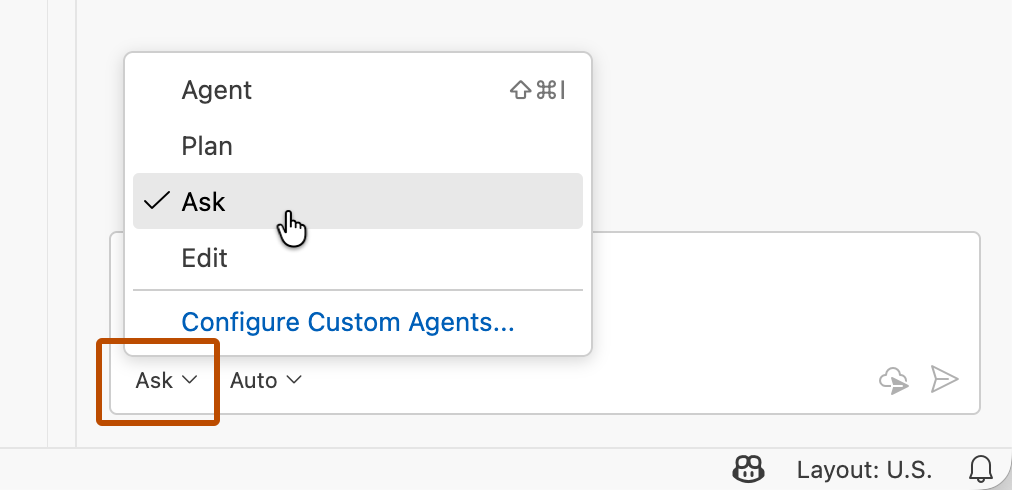
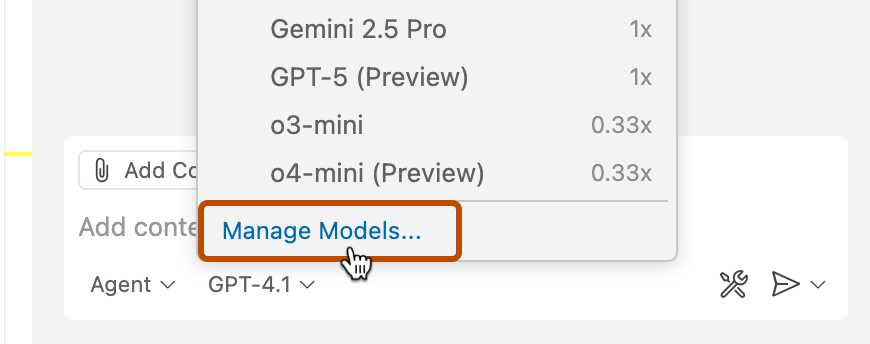
In VS Code, the Chat model is changed using the dropdown at the bottom of the panel. This choice does not change the model for inline suggestions, as the model switching guide explains.
As an operational recommendation, Nexo suggests recording the experience being used, the model shown, and the applicable policy separately. This short record helps distinguish an access problem from a decision about which alternative to adopt.
Interpretation: replacements need their own acceptance criteria
Nexo’s editorial interpretation is that a provider’s recommendation offers a starting point for evaluating an alternative. It does not demonstrate that the replacement will preserve the behavior a team requires.
A useful review can begin with model references in instructions, training materials, and internal procedures. The team can then define an acceptable response: respecting an interface, preserving existing tests, or explaining a change precisely enough.
If the previous model is no longer accessible, the comparison can use explicit requirements and previously retained outputs. It should be described as an acceptance evaluation, without presenting it as a simultaneous test of the models.
A synthetic evaluation example
The following exercise is a Nexo proposal; it has not been run and does not represent any model’s results. It uses a fictional repository so that the example does not depend on private code.
Task: fix a function that adds amounts and fails when given an empty list.
Criteria: return zero for an empty list, preserve the public signature, and add tests for normal and empty inputs.
Record: note the model, client, instructions, supplied context, tests passed, and human interventions required.
Created with AI assistance and reviewed by Nexo Community. Practical proposals and editorial interpretation are distinguished from documented facts.