
Microsoft Teams plans AI controls for organisers and IT
The roadmap envisages greater organiser control over AI use in meetings and a simpler policy model for IT.
Microsoft · Announcement: · Editorial review
AI · MICROSOFT · SHARED KNOWLEDGE
Understand what’s changing.
Discover what you can do with it.
IN FOCUS / AI & industry
Dates, registration and AI topics in the announced Paris agenda, with questions and examples for evaluating Business Central solutions.
Read the story 4 minEXPLORE NEXO
21 articles
The roadmap envisages greater organiser control over AI use in meetings and a simpler policy model for IT.
Microsoft · Announcement: · Editorial review
ANNOUNCEMENT & AVAILABILITY
Checked on 26 October 2026. Roadmap information, without rollout confirmation. Operational context comes from Microsoft's current public documentation.
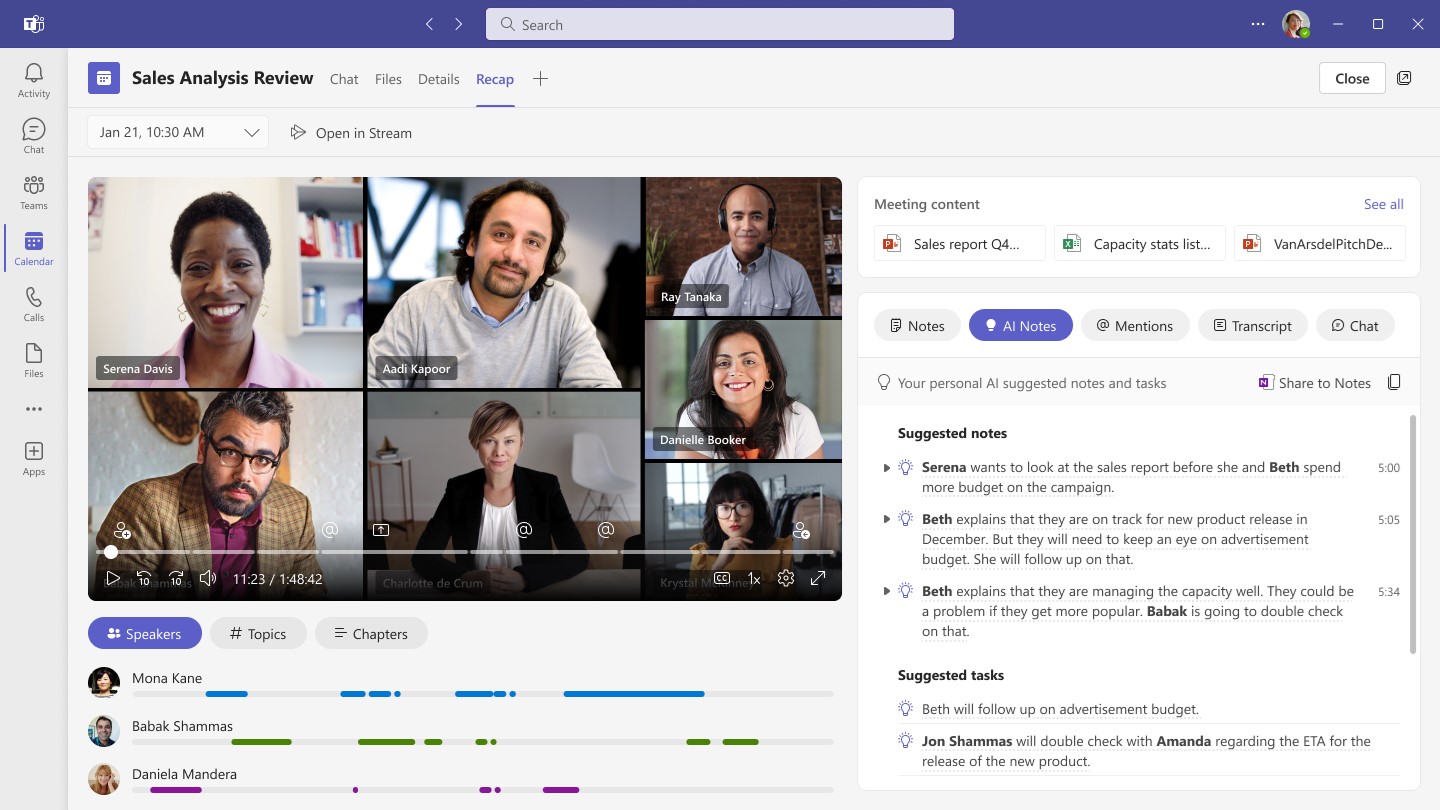
Microsoft Teams: Enhanced Copilot and AI controls for meetingsMicrosoft Teams is preparing changes that would let organisers manage who can enable and use AI in their meetings. For IT, Microsoft announces a simpler policy model covering experiences during and after the session. The changes appear in its public roadmap digest.
The official entry 577399, created on 22 October 2026 and modified on 23 October, remains in development. It targets general availability in November 2026 for Worldwide (Standard Multi-Tenant), with Android, desktop, iOS, Mac and web among the listed platforms.
Microsoft warns that dates and descriptions on its roadmap are estimates subject to change. This forecast does not confirm that the controls are available today or guarantee an activation date for each organisation.
The current administrator documentation distinguishes four Copilot policy values, alongside their interaction with the transcription policy. These identifiers describe the configuration currently documented.
| Copilot value | Initial meeting setting | Can the organiser change it? |
|---|---|---|
| Enabled | During the meeting only | Yes |
| EnabledWithTranscript — default | During and after | No |
| EnabledWithTranscriptDefaultOn | During and after | Yes |
| Disabled | Off | Yes |
Configuring AI use and holding a licence to use it are separate matters. Microsoft Support explains that organisers can adjust the options even without a Copilot licence. Participants using it need the appropriate Microsoft Copilot licence.
The same guide distinguishes use during the meeting, which can work without saving a transcript, from later questions about the spoken discussion, which require an available transcript. Turning off Copilot for the meeting also disables recording and transcription; Copilot in the chat can still answer questions about chat messages.
In its guidance on use without transcription, Microsoft warns that prompts and responses may be retained under Microsoft Purview policies, even without recording or transcription. It also states that external participants cannot use the meeting-only Copilot mode, even if they hold a licence.
Our editorial interest is how responsibility for AI is assigned: which rules IT establishes and which decisions organisers make for individual sessions. We propose these hypothetical scenarios for evaluating the controls when they become available:
The entry does not detail permissions by role, every affected AI experience, specific licensing requirements or the mapping to existing policies. It does not describe an automatic migration either. These are limits of the information published in entry 577399.
We recommend documenting current settings and preparing those checks before changing organisational rules. Assessment of the new model will need to draw on its rollout instructions and behaviour that can be verified when it arrives.
Created with AI assistance and reviewed by Nexo Community. Practical proposals and editorial interpretation are distinguished from documented facts.
Read the source ↗CONNECT THIS IDEA
OpenAI’s API supports questions with bounded answers and up to 400 questions per request. Its usefulness in a specific workflow will depend on measured errors, latency and cost.
OpenAI · Announcement: · Editorial review
PHP has released updates for two critical flaws. OpenAI uses the case to propose how to coordinate validation, disclosure and deployment.
OpenAI · Announcement: · Editorial review

More articles appear as you continue scrolling.
LET’S KEEP CONNECTING
Discover new articles or suggest a question from your experience.