Microsoft announces a new purchasing route for December. Preparation involves reviewing catalogue data and the licences needed for each intended use case.
Microsoft · Announcement: · Editorial review
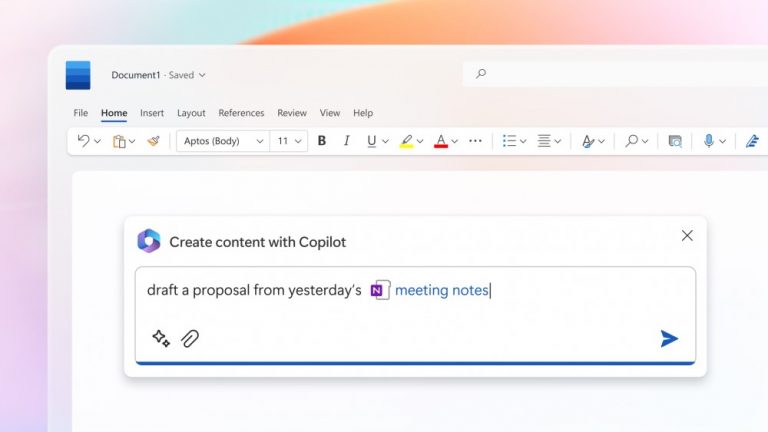
Microsoft 365 Copilot in Word (archive). Microsoft · Used with permission from Microsoft.
GitHub lets agents and services use Copilot through GitHub Apps and attribute consumption to the organization. Usage reporting distinguishes apps, while budgets remain shared.
A Microsoft reference architecture guides the design of internal support with Copilot Studio. Permissions, escalation, and testing shape what is worth automating.
Business Central 29 combines controls over selectable layouts with APIs for querying the report inbox, retrieving files and updating their read status.
Microsoft lists three enhancements in public preview: multiple excise duties per item, withholding on employee transactions and vendor-specific self-billing number series. Their application depends on the process and configuration.
BC29 adds purchase order instructions, assisted setup and new warehouse options for subcontracting, building on capabilities already available in 28.3.
GitHub adds optional comparisons to the Copilot impact dashboard. The indicators place adoption and pull request merge rates alongside participating peers, with limits worth understanding before setting targets.
OpenAI’s policies will require prior approval to give third parties direct access to its models from November 20, 2026. The text distinguishes this service from integrating models into an application.
BC29 brings together data-driven AL tests, command-line execution and Page Scripting. A fictional example explores their combined use, including version and environment limitations.
The change merged on October 26 prepares consumption logging and a trial allowance shared across an environment. Its inclusion in the repository does not establish a customer rollout.
Sources checked on October 27, 2026. Scope: public code and product documentation. Customer deployments and specific commercial terms for the new allowance have not been verified.
Microsoft incorporated the Expense Agent change identified by commit 6c85fdb into BCApps. The update introduces a second version of the consumption-logging action and support for a 50-expense trial.
Expense Agent helps turn receipts into expenses that employees review before submitting their reports. That process combines data extraction, categorization, and human review, according to the product overview. The BCApps change focuses on how usage of that service is recorded and classified.
What changes in the API
The LogAIConsumptionV2 action accepts a JSON request and requires session, interaction, user, and source identifiers, along with an actions summary and operation name. It checks agent access and validates the request before logging consumption.
V2 names the new action: the API page remains marked as beta. The previous action is marked obsolete from 30.0, and its inclusion depends on a compilation condition.
How the trial is designed
The setup wizard adds a remaining free-expense balance and explains that it is shared across all expense users and companies in the environment. The design therefore does not allocate 50 expenses to each employee.
The consumption handler sets the allowance to 50 and implements these rules:
Policy-evaluation operations identified by the PE: prefix do not increment the counter when handled as trial consumption. This does not establish that those evaluations are permanently free.
Retries retrieve the trial or paid classification saved in the existing record.
The CanConsume check permits consumption while trial quota remains, even without paid quota; after exhaustion, it checks paid quota.
Examples of expected behavior
The added quota tests express these scenarios. The table summarizes their expectations; it does not present execution results obtained by Nexo.
Scenario
Result expected by the test
The final trial expense is retried after the balance has been exhausted.
Preserve its identifier and trial classification without logging paid consumption.
A paid operation is retried after trial quota becomes available.
Preserve its paid classification and leave the trial quota untouched.
What validation is documented
The validation description in PR #12539 reports a successful build of the affected application and the addition of six quota tests and two null-value validation tests. It also documents that the latest local attempt to compile the complete test application was blocked by five missing dependency packages.
The author states that runtime tests were not executed. Nexo has consulted the code and public sources without compiling the solution, executing those tests, or checking its behavior in a customer environment.
Availability and commercial limits
The manifest at this commit identifies the application as Expense Agent (Preview), version 30.0.0.0. This describes the inspected code; the checked sources do not establish a rollout date or commercial eligibility or duration for the new allowance.
Microsoft documents Expense Agent for Business Central online as a production-ready preview subject to supplemental terms. It also specifies consumption of 50 Copilot Credits per processed receipt. That rate and the 50-expense trial measure different things. Expense Agent documentation.
The dedicated availability table includes all supported Business Central country or region versions and lists Spanish from Spain among Expense Agent languages. However, the setup guide still states validation and support in EN-US only. The pages disagree on language coverage; geographic availability may also require authorization for data movement across geographies.
Nexo's interpretation
The practical significance of the change lies in making the relationship between trials, consumption, and retries easier to understand. For functional and technical leads, it provides a basis for preparing checks of the shared balance and operation traceability when the corresponding version becomes available in their environment.
Created with AI assistance and reviewed by Nexo Community. Practical proposals and editorial interpretation are distinguished from documented facts.