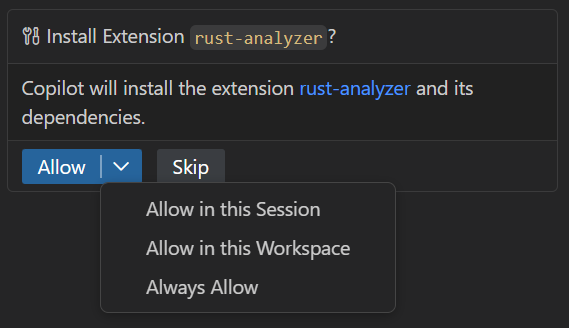
GitHub announces general availability for Copilot assisted permissions, a change that makes the level of oversight a decision for teams working with coding agents.
A technical and functional proposal based on an October 28 commit message, focused on the reported scenario, regression design, and unresolved release coverage.
Microsoft · Announcement: · Editorial review
Warehouse work (archive, 2023). Photo: Ricardo J. Reyes / DVIDS. The appearance of U.S. Department of War (DoW) visual information does not imply or constitute DoW endorsement.
Microsoft announces a new purchasing route for December. Preparation involves reviewing catalogue data and the licences needed for each intended use case.
Microsoft · Announcement: · Editorial review
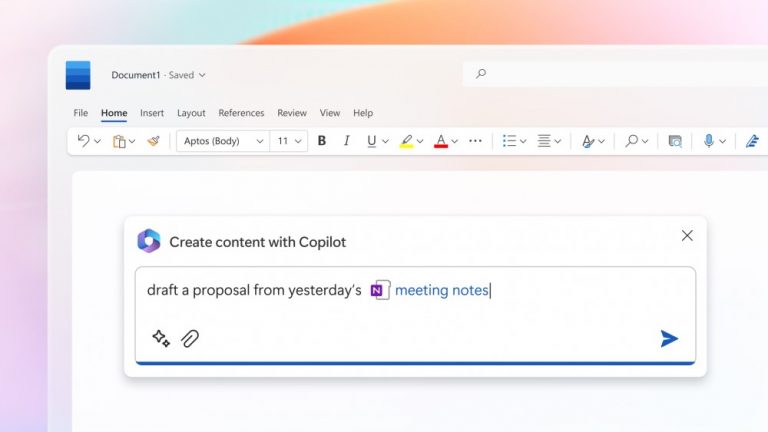
Microsoft 365 Copilot in Word (archive). Microsoft · Used with permission from Microsoft.
GitHub lets agents and services use Copilot through GitHub Apps and attribute consumption to the organization. Usage reporting distinguishes apps, while budgets remain shared.
Public sources consulted on October 28, 2026. Availability, authentication, permissions, billing, and revocation were checked against documentation; no SDK tests or private CSV reports were examined. The practical example is hypothetical.
GitHub announced on October 27 the public preview of server-to-server authentication for Copilot SDK. Agents and services can make requests through a GitHub App installed on an organization, without relying on a signed-in person's credentials. Usage is attributed and billed to that organization, whose model policies also apply.
The administration documentation lists Copilot Business and Copilot Enterprise, with management by organization owners. This method supports organization installations; installations on personal accounts and on the enterprise account itself are excluded. The preview is subject to change. The technical guide also requires the organization to be enabled for this authentication method.
How an application authenticates
For services outside GitHub Actions, the technical guide describes creating a GitHub App, granting the `Read-only` organization permission `Copilot Requests`, and installing it. In the child-process example, the token is passed explicitly to the SDK; `useLoggedInUser: false` disables automatic credential discovery.
Installation tokens expire after one hour. The technical guide calls for renewal before expiration and restarting the client or runtime, depending on the deployment.
GitHub Actions has a separate path using `GITHUB_TOKEN` and specific policies. For the GitHub App method, the administration guide clarifies that enabling the “Allow use of Copilot CLI billed to the organization” policy is unnecessary.
What the permission authorizes
Despite its `Read-only` label, this permission allows AI credit consumption, according to the administration guide.
Repository operations require the permissions appropriate to each API. Authorization to request Copilot does not replace authorization to read content or perform other task operations.
When generating an installation token, its permissions and repositories can be restricted. The token cannot obtain more access than the installation was granted.
App usage reporting, organization budgets
The budget documentation confirms that consumption from these installations counts against the organization's budget. Individual app or installation budgets are unavailable. Blocking requests at the limit requires enabling “Stop usage when budget limit is reached”; an alerts-only budget allows spending to continue.
The reports reference defines `app_client_id` as the client ID of the GitHub App associated with consumption. It is used alongside `organization` in the AI usage CSV report. It may be empty, for example, for consumption attributed to users, GitHub Actions, or records predating app attribution.
The administration guide specifies that app attribution is available in CSV exports, rather than GitHub's AI usage view.
Installation management allows an app to be temporarily suspended or uninstalled to block its access to organization resources. That withdrawal affects the installation's overall access.
Hypothetical example: a change-summary assistant
Imagine an internal service preparing change summaries for a development team. This editorial example proposes design decisions; it does not describe a tested implementation or measured results.
Purpose: start with a test repository and deliver a draft to the team.
Permissions: inventory Copilot requests, repository reading, and any subsequent writing separately.
Ownership: assign a team to maintain credentials and review attributed consumption.
Containment: design request-rate limits and a stop mechanism within the service. These would be application controls, distinct from GitHub's organization budget.
Removal: rehearse suspending the installation and review which other service functions would lose access.
Nexo's interpretation
Our interpretation is that this preview provides a clearer governance point for automated services: the app installation. Adoption should connect each service to an accountable team and test credential renewal, attribution, and access removal in a pilot. Identifying an application's spending helps with oversight; the budget limit remains shared.
Created with AI assistance and reviewed by Nexo Community. Practical proposals and editorial interpretation are distinguished from documented facts.