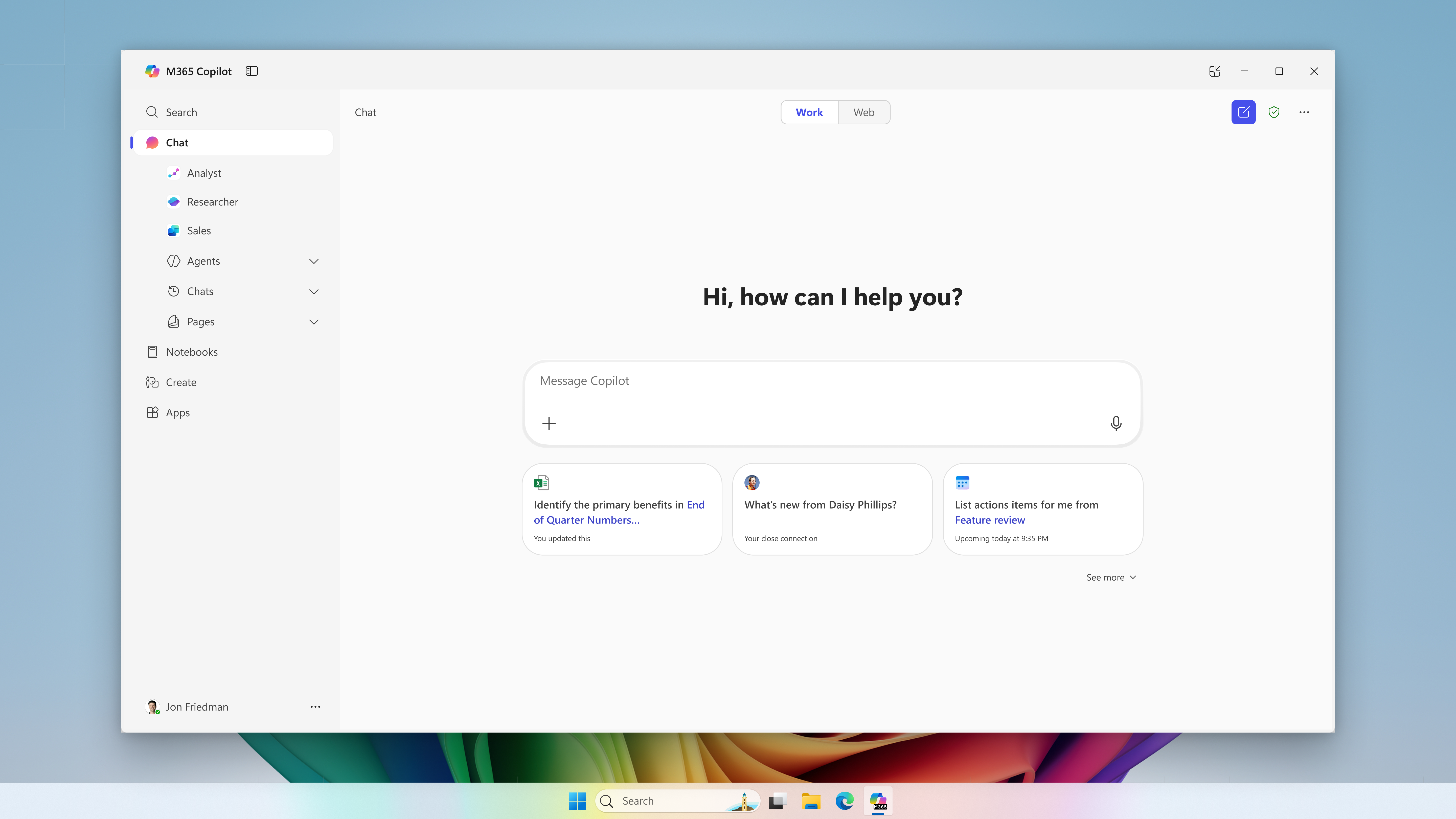
Microsoft extends usage limits to additional Copilot Chat features for users without a Microsoft 365 Copilot license in commercial organizations. The notifications call for support preparation and a review of license requests, without turning every limit into a recommendation to buy.
The November 9 selection connects financial automation, analytics and oversight: what Microsoft documents and what teams should evaluate before bringing it into a project.
Public Microsoft sources checked on November 9, 2026. Status labels apply to the specific capabilities listed; they do not establish activation in every environment. Documentation dates are not launch dates. A discrepancy between sources about Payables Agent language support is explicitly retained.
This week's editorial reading brings together three different decisions: how to review documents prepared by an agent, which information to move into the analytics platform, and when an automation should stop. A shared artificial intelligence label does not make their requirements interchangeable.
Evaluate prerequisites and preview terms; do not equate this with general availability.
Credit notes: prepare the document and review its application
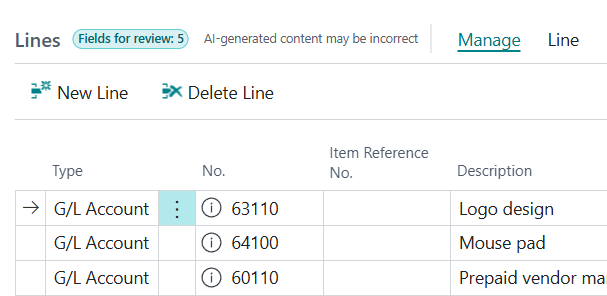
According to the Payables Agent overview, the agent prepares drafts from PDF documents. For credit notes, it skips purchase order matching and requests a review of the invoice they will be applied to. Finalizing the draft creates an unposted purchase credit memo; the agent's review does not replace Business Central approvals. Its activity is constrained by assigned permissions and consumes Copilot Credits.
Expenses: a preview with review and consumption
The Expense Agent overview applies to Business Central online and describes the overall feature as a production-ready preview, subject to supplemental terms. Employees can submit expenses through the web app without a Business Central license; working inside the ERP requires one. They must review the data before submitting the report.
Microsoft documents consumption of 50 Copilot Credits per processed receipt. That consumption unit is not a price in euros: budgeting must account for the contracted billing model.
Fabric: decide what is mirrored and who can query it
The mirroring integration copies an initial snapshot and subsequent changes from selected companies and tables into OneLake. This makes the data available to analytics experiences without repeatedly querying Business Central APIs.
The documented setup requires an online environment compatible with the extension, mirroring administration permissions and active Fabric capacity. The workspace must share a Microsoft Entra tenant with Business Central. The service identity needs access to the destination. Completing the connection wizard does not itself start synchronization.
The FAQ sets a maximum of 1,000 selected tables and allows table selection, rather than a custom list of fields. Latency depends on the full process, so a fixed completion time should not be promised. Background replication compute is not charged, but free storage has capacity-based limits and queries incur the usual charges.
Our interpretation: the first decision should concern the required dataset and access at the destination. Copying more information than necessary adds governance work without demonstrating greater analytical value on its own.
Availability and languages: a material discrepancy
The Copilot and agents availability table lists Spanish from Spain for Expense Agent, and Spanish from Spain and Mexico for Payables Agent. However, the Payables Agent overview still states that validation and support are English-only. The sources do not resolve this discrepancy; we do not treat Spanish support for that agent as confirmed.
Environment country, data location, language and AI processing geography are separate factors. The language table alone does not establish that a feature is enabled in a particular installation. Deployment planning requires checking the actual configuration and, where applicable, cross-geography data movement.
The guide recommends bounded retries, evidence of completion and checks for state changes before repeating an action. It also warns that instructions alone do not guarantee stopping. These recommendations do not establish that Payables Agent or Expense Agent uses that harness or exposes the same controls.
Three tests proposed by Nexo
The following examples are synthetic and express editorial evaluation criteria. They do not describe executed tests, measured results or manufacturer guarantees.
Credit notes: prepare fictional documents with a correct invoice reference, a nonexistent reference and an ambiguous one. Record what the agent proposes, what the supervisor corrects and how application is configured before posting.
Fabric: select a test company and a small set of tables. Compare source and destination data, measure observed delay and check access with an authorized user and an unauthorized one.
Custom agent: simulate a tool creating a document but returning an uncertain result. Define beforehand what evidence would permit continuation, and verify that the agent does not create a duplicate while attempting recovery.
Created with AI assistance and reviewed by Nexo Community. Practical proposals and editorial interpretation are distinguished from documented facts.
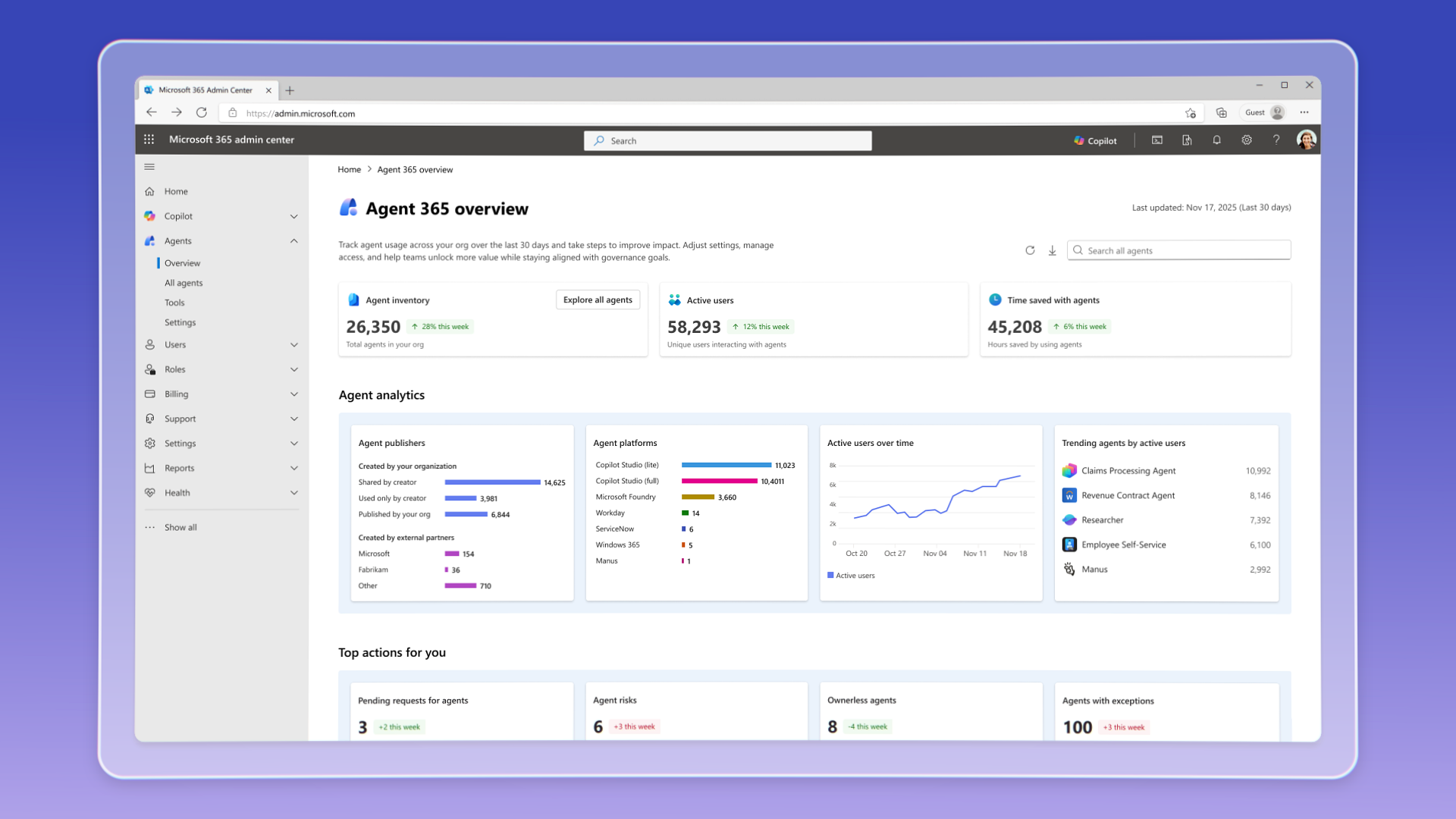
Agent 365 has been generally available commercially since May 1, 2026, with per-user licensing; the sources consulted do not specify Action Center’s rollout status.