ANNOUNCEMENT & AVAILABILITY
Checked on October 23, 2026 against the two registered announcements and the official English and Spanish guidelines. The sources describe Apple's policy; they do not establish its effectiveness or any particular app's compliance. The version comparison focuses on EN/ES. Nexo's interpretation and examples are explicitly identified.
Updated App Review Guidelines are now availableWhat changes and which apps are covered
Apple announced an App Review Guidelines update on October 16, 2026. Its companion explanation links guideline 1.2 to proactively preventing and removing nonconsensual intimate imagery, including AI-generated imagery. Update announcement, Apple's explanation.
Guideline 1.2 covers content created, generated, uploaded or shared by users and explicitly includes AI content creation apps. Its scope also deserves attention in creative tools incorporating these capabilities. Guideline 1.2.
Moderation: required mechanisms and limits
Guideline 1.2 specifies the four mechanisms listed below. It requires timely responses to reports but prescribes neither a detection technique nor a numerical response deadline. Current English guidelines.
Apple warns of possible code of conduct violations and app removal when adequate safeguards are missing or violations remain unaddressed after notice. Apple's explanation.
- Filter objectionable material to prevent it from being posted to the app.
- Enable reports of offensive content and provide timely responses.
- Enable users to block abusive users.
- Publish contact information that users can easily access.
2.5.19: visible and documented features
Guideline 2.5.19 gives a separate number to an existing prohibition, previously covered by 2.3.1: hidden, dormant or undocumented features. Update announcement.
Apple's explanation addresses apps that misrepresent themselves during review and later reveal undisclosed capabilities. That conduct can lead to app removal and removal from the Apple Developer Program. Apple's explanation.
Availability, languages and distribution
The English guidelines consulted are dated October 16, 2026. The page marks the rules applicable to notarization of iOS and iPadOS apps; the scope of the guidelines needs to be checked for the distribution channel concerned. English guidelines.
Apple announced updated translations within one month, without specifying dates for individual languages. When checked on October 23, the Spanish version was still dated June 8, 2026 and did not include guideline number 2.5.19. For this update, the article relies on the English text; its Spanish wording is Nexo's translation. Announced schedule, Spanish version consulted.
Section 5 also clarifies App Store removal and blocking from alternative distribution for apps facilitating human trafficking or child exploitation. Update announcement.
Editorial interpretation: questions for the team
For Nexo, the practical implication is to review the entire content journey: input, generation, publication and handling reports. We propose assigning responsibilities across product, development and moderation and retaining evidence from tests. These questions are an editorial proposal:
- Product: does the feature inventory describe what each user can do depending on their account, subscription or configuration?
- Development: which capabilities depend on the server, and how are changes documented so they can be reviewed?
- Moderation: who receives reports, decides what action to take and handles cases arriving outside normal working hours?
- Coordination: which tests demonstrate that controls work, and which issues remain open before submission?
Proposed examples
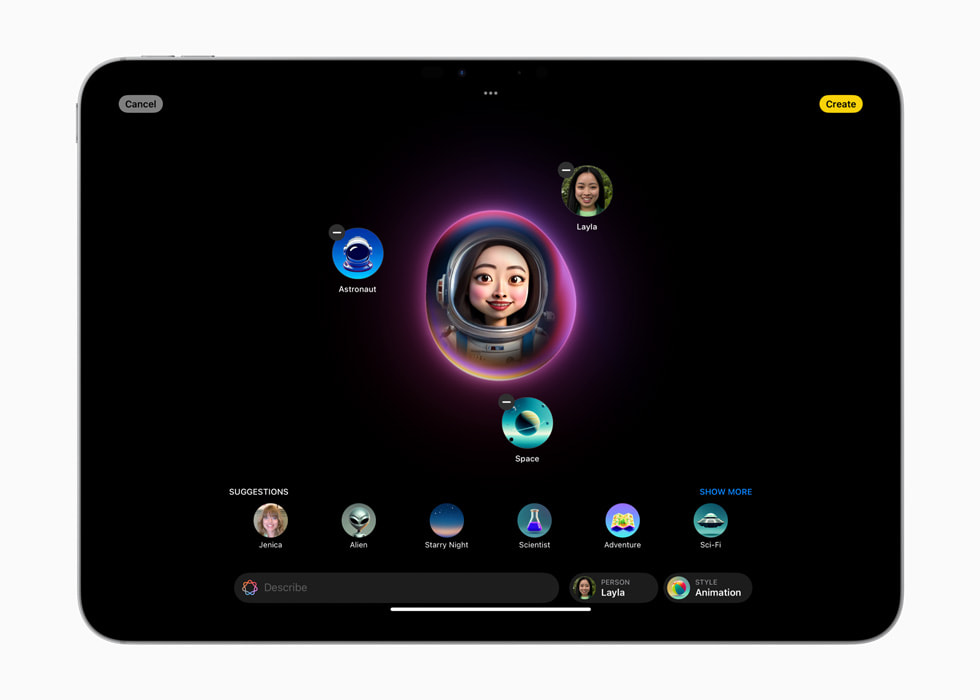
Fictional moderation example: a portrait editor team could use synthetic material featuring fictional people to test attempted abuse, false positives and the handling of a report through to resolution. Nexo proposes recording what failed, who intervened and what changed.
Fictional transparency example: if an editing feature depends on a server setting, the team could compare what is available during review with what is planned for launch and explain each difference. This is a proposed consistency check; it does not establish that a particular remote configuration complies with the rules.
These questions and exercises are not an official Apple checklist and do not establish compliance. They describe neither investigated apps nor tests that have been performed. A decision about a particular app requires evaluating its features, operation and applicable guidelines.
Created with AI assistance and reviewed by Nexo Community. Practical proposals and editorial interpretation are distinguished from documented facts.
Read the source ↗